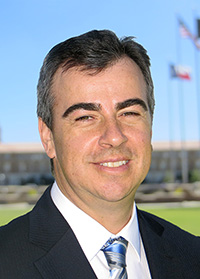
Michael D. Noel
Professor, Department of Economics, Texas Tech University
Visiting Instructor, Department of Economics, UCSD
Dr. Noel is now a Professor of Economics at Texas Tech University. You will be redirected to his personal website at
Noel Economics (www.noeleconomics.com)
in a few seconds. If not redirected, click on any link.
Degrees
- Ph.D. Economics, Massachusetts Institute of Technology
- M.A. Economics, U. of Toronto
- Hons. B. Sc. Economics, Statistics, Computer Science, U. of Toronto
Research Interests
- Competition Economics
- Antitrust Economics & Industrial Organization
- Strategy
Biography
Dr. Michael Noel is a Competition Economist and Professor of Economics in the Department of Economics at Texas Tech University. Dr. Noel publishes extensively on antitrust and competition issues and is perhaps best known for his work on dynamic price competition in the Oil & Gas industry. He co-discovered and pioneered the literature on price cycles in retail gasoline markets. Dr. Noel teaches graduate and undergraduate level courses at the intersection of economics and antitrust law, and regularly interacts with industry, government, the legal community, and the media to discuss competition issues. Dr. Noel holds a Ph.D. in Economics from the Massachusetts Institute of Technology (M.I.T.)
Dr. Noel is an expert in antitrust economics and merger analyses. He has analyzed antitrust and merger issues in a wide range of industries including the Oil & Gas industry, the banking industry, retail products, supermarkets, health care and pharmaceuticals, payment cards, book publishing, auto manufacturing, and others. Dr. Noel's areas of expertise include price fixing, collective dominance, coordinated behavior, predatory pricing, price discrimination, market definition, mergers, vertical contracts, damages, and regulatory issues. In addition, Dr. Noel has experience in a wide range of labor and employment issues and has handled numerous labor-related damages matters. Dr. Noel is also an expert in competitive strategy, with extensive experience in data-driven price optimization and strategic positioning analyses.
Dr. Noel's research has been published in a variety of economics journals including the RAND Journal of Economics, the Review of Economics and Statistics, the Journal of Industrial Economics, the International Journal of Industrial Organization, Energy Economics, the Journal of Economics and Management Strategy, and others. He has also published articles at the intersection of economics and antitrust law in legal journals including the Columbia Business Law Review, the CPI Antitrust Chronicle, the Antitrust Practitioner, and the Canadian Competition Law Review. He has presented his research to audiences on all seven continents around the world, and serves as a peer reviewer for forty-plus journals in economics.
Over the past twenty years, Dr. Noel has taught university courses on competitive strategy and the economics of antitrust to thousands of students at the graduate and undergraduate levels. Dr. Noel is a teacher by trade, and is skilled at explaining even the most complex economic problems in a straightforward and accessible manner. Prior to his current appointment, Dr. Noel taught courses in economics and antitrust at the University of California, the University of Toronto, and M.I.T.
Dr. Noel also lends his expertise to the national and international media. He is often called upon to discuss current economic events - from changing oil and gasoline prices to disputed merger reviews to labor market issues - in the news.
Selected Publications
Peer-Reviewed Publications:
Noel, Michael D. and Qiang, Hongjie (2019). "The Role of Information in Retail Gasoline Price Dispersion", Energy Economics 80, pp. 173-187.
Noel, Michael D. (2018). "Gasoline Price Dispersion and Consumer Search: Evidence from a Natural Experiment", Journal of Industrial Economics 66:3, pp. 701-738.
Noel, Michael D. (2018). Calendar Synchronization of Gasoline Price Increases", Journal of Economics and Management Strategy 28:2, pp. 355-370.
Noel, Michael D. and Roach, Travis (2017). "Marginal Reductions in Vehicle Emissions Following an Ethanol Mandate: Evidence from a Natural Experiment", Energy Economics 64, pp. 45-54.
Noel, Michael D. (2016). "Pricing Strategies and Litigation Risks: An Economic Analysis of the Downstream Petroleum Industry", Journal of Competition Law and Economics 12:2, pp. 287-311.
Noel, Michael D. and Roach, Travis (2016). Regulated and Unregulated Substitutes: Aversion Effects from an Ethanol Mandate", Economic Inquiry 54:2, pp. 1150-1166.
Noel, Michael D. (2016). "Retail Gasoline Markets" in the Handbook on the Economics of Retail and Distribution, E. Basker (ed.), Edward Edgar Publishing.
Noel, Michael D. (2015). "Do Edgeworth Price Cycles Lead to Higher or Lower Prices?", International Journal of Industrial Organization 42:3, pp. 81-93.
Noel, Michael D. and Chu, Lanlan (2015). "Forecasting Gasoline Prices in the Presence of Edgeworth Price Cycles.", Energy Economics 51, pp. 204-214.
Noel, Michael D. et al. (2014). "Consumer Market Study on the Functioning of the Market for Vehicle Fuels from a Consumer Perspective". Report for the Executive Agency for Health and Consumers (EAHC) on behalf of the European Commission.
Noel, Michael D. and Schankerman, Mark (2013). "Strategic Patenting and Software Innovation", Journal of Industrial Economics 61:3, pp. 481-520.
Noel, Michael D. (2013). "The 2012 Abuse of Dominance Guidelines: An Economic Review", Canadian Competition Law Review 26:1, pp. 59-77.
Basker, Emek and Noel, Michael D. (2013) "Competition Challenges in the Supermarket Sector with an Application to Latin American Markets", Report for the World Bank and the Regional Competition Center for Latin America.(Published in Spanish as "Desafios de la Competencia en el Sector de Supermercados con Aplicacion a los Mercados de America Latina" (2014).)
Noel, Michael D. (2012). "Edgeworth Price Cycles and Intertemporal Price Discrimination", Energy Economics 34(4), pp. 942-954.
Noel, Michael D. (2012). "Market Definition Does Not Yield Evidence of Class-Wide Impact", The Antitrust Practitioner, Vol. 9, June 2012, pp. 14-18.
Lewis, Matthew S. and Noel, Michael D. (2011). "The Speed of Gasoline Price Response in Markets with and without Edgeworth Cycles", Review of Economics and Statistics 92(3), pp. 672-682.
Noel, Michael D. (2011). "Upward Price Pressure, Merger Simulation, and Merger Simulation Light", CPI Antitrust Chronicle Spring 2011 3:1.
Noel, Michael D. (2011). "Edgeworth Price Cycles", New Palgrave Dictionary of Economics, Eds. Steven N. Durlauf and Lawrence E. Blume. Palgrave Macmillan.
Noel, Michael D. (2009). "Do Gasoline Prices Respond Asymmetrically to Cost Shocks? The Effect of Edgeworth Cycles", RAND Journal of Economics 40:3, pp.582-595.
Basker, Emek and Noel, Michael D. (2009). "The Evolving Food Chain: Competitive Effects of Wal-Mart's Entry into the Supermarket Industry", Journal of Economics and Management Strategy 18:4, pp. 977-1009.
Noel, Michael D. (2008). "Edgeworth Cycles and Focal Prices: Computational Dynamic Markov Equilibria", Journal of Economics and Management Strategy 17:2, pp. 345-377.
Evans, David E. and Noel, Michael D. (2008). "The Analysis of Mergers that Involve Multi-sided Platform Businesses", Journal of Competition Law and Economics 2008:4, pp. 663-695. Reprinted as "Defining Markets that Involve Two-Sided Platforms" in Platform Economics: Essays on Multi-Sided Businesses, D. Evans (ed.), CPI Policy International e-book, 2011.
Noel, Michael D. (2007). "Edgeworth Price Cycles: Evidence from the Toronto Retail Gasoline Market", Journal of Industrial Economics 55:1, pp. 69-92.
Noel, Michael D. (2007). "Edgeworth Price Cycles, Cost-based Pricing and Sticky Pricing in Retail Gasoline Markets", Review of Economics and Statistics 89:2, pp. 324-334.
Evans, David S. and Noel, Michael D. (2005). "Defining Antitrust Markets when Firms Operate Multi-Sided Platforms", Columbia Business Law Review, 2005:3 pp. 667-702.
Conference Proceedings and Other Publications:
Noel, Michael D. (2013) "Pricing Patterns and Behaviors that Cause Litigation Risks", 2013 Petroleum Marketing Attorneys' Meeting, Washington, DC.
Basker, Emek and Noel, Michael D. (2013) "Regional Competition Center for Latin America Presents: Competition Challenges in the Supermarket Sector", CPI Policy International Newsletter.
Noel, Michael D. (2012). "Excessive Volatility in Gasoline Prices? Economic Research Shows that Many Price Spikes and Other Patterns, Often the Subject of Antitrust Concern, Are in Fact Consistent with Competition", American Bar Association, Section of Antitrust Law, Transportation and Energy Committee Newsletter, Spring 2012.
Noel, Michael D. (2012). "Blowing Up the Rockets and Feathers Conspiracy", Law360 (Competition and Energy Law), online, January 19, 2012.
Noel, Michael D. (2011). "The Promise of Unconventional Oil", Oil & Gas Monitor, online, December 19, 2011.
Noel, Michael D. (2005). "Is the City's Recently Passed Gas-Gouging Bill Responsible Public Policy?", San Diego Daily Transcript, San Diego: September 14, 2005, p. A9.
