James D. Hamilton
Robert F. Engle Professor of Economics

James D. HamiltonRobert F. Engle Professor of Economics |
|
Professor of Economics, UCSD
E-mail: jhamilton@ucsd.edu
Address:
Department of Economics, 0508
University of California, San Diego
9500 Gilman Drive
La Jolla, CA 92093-0508
A Full-Information Approach to Granular Instrumental Variables, coauthored with Christiane Baumeister. Modeling how individual units interact to determine aggregate outcomes can be a rich source of identifying information. We use this insight to develop a generalization of granular instrumental variables estimation and show how parameters of a dynamic structural model can be estimated using full-information maximum likelihood. We apply the method to a study of the world oil market. We conclude that the supply responses of Saudi Arabia and adjustments of inventories have historically played a key role in stabilizing the price of oil. Link to presentation slides. Link to video.
Principal Component Analysis for Nonstationary Series, coauthored with Jin Xi. This paper develops a procedure for uncovering the common cyclical factors that drive a mix of stationary and nonstationary variables. The method does not require knowing which variables are nonstationary or the nature of the nonstationarity. Applications to the term structure of interest rates and to the FRED-MD macroeconomic dataset demonstrate that the approach offers similar benefits to those of traditional principal component analysis with some added advantages.Download data, replication code, and recent values of the macroeconomic indexes or presentation slides.
Supply, Demand, and Specialized Production. This paper develops a unified model of economic fluctuations and growth characterized by long-run equilibrium unemployment and sustained monopoly power. The level of demand is a key factor in deviations from the steady-state growth path with a Keynesian-type spending multiplier despite the absence of any nominal rigidities. The key friction in the model is the technological requirement that production of certain goods requires a dedicated team of workers that takes time to assemble and train.
Measuring the Credit Gap, coauthored with Daniel Leff. We revisit the analysis by Drehmann and Yetman (2018) and conclude that measuring the credit gap based on the 5-year growth rate of the credit-to-GDP ratio produces a more reliable and robust predictor of financial crises than does the Hodrick-Prescott filtered series. We also conclude that estimating the credit gap based on the forecast error of a 5-year-ahead regression can be even more useful, provided a sufficiently long sample is available to estimate coefficients of the regression.
Structural Interpretation of Vector Autoregressions with Incomplete Identification: Setting the Record Straight, coauthored with Christiane Baumeister. A recent paper by Kilian and Zhou (2019) mischaracterizes our 2019 paper in American Economic Review and much of the related literature. They misstate our contribution to the literature on identification, mischaracterize the role of prior information about supply elasticity in our analysis, inaccurately describe the relation between structural elasticities and the impacts of shocks, and mischaracterize the literature on supply elasticity. Our purpose in this paper is to set the record straight. Download data and code to replicate.
Advances in Using Vector Autoregressions to Estimate Structural Magnitudes, forthcoming, Econometric Theory. Coauthored with Christiane Baumeister. This paper surveys recent advances in drawing structural conclusions from vector autoregressions, providing a unified perspective on the role of prior knowledge. We describe the traditional approach to identification as a claim to have exact prior information about the structural model and propose Bayesian inference as a way to acknowledge that prior information is imperfect or subject to error. We raise concerns from both a frequentist and a Bayesian perspective about the way that results are typically reported for VARs that are set-identified using sign and other restrictions. We call attention to a common but previously unrecognized error in estimating structural elasticities and show how to correctly estimate elasticities even in the case when one only knows the effects of a single structural shock. Replication code.
Structural Vector Autoregressions with Imperfect Identifying Information, American Economic Association Papers and Proceedings, May 2022, 112, pp. 466-470. Coauthored with Christiane Baumeister. Prepared for the AEA Papers & Proceedings. The problem of identification is often the core challenge of empirical economic research. The traditional approach to identification is to bring in additional information in the form of identifying assumptions, such as restrictions that certain magnitudes have to be zero. In this paper we suggest that what are usually thought of as identifying assumptions should more generally be described as information that the analyst had about the economic structure before seeing the data. Such information is most naturally represented as a Bayesian prior distribution over certain features of the economic structure. replication code
Measuring Labor-Force Participation and the Incidence and Duration of Unemployment, Review of Economic Dynamics, April 2022 (4):1-32. Coauthored with Hie Joo Ahn. The underlying data from which the U.S. unemployment rate, labor-force participation rate, and duration of unemployment are calculated contain numerous internal contradictions. This paper catalogs these inconsistencies and proposes a unified reconciliation. We find that the usual statistics understate the unemployment rate and the labor-force participation rate by about two percentage points on average and that the bias in the latter has increased over time. The BLS estimate of the average duration of unemployment substantially overstates the true duration of uninterrupted spells of unemployment and misrepresents what happened to average durations during the Great Recession and its recovery. Online appendix here. Revised data series developed in the paper available here. Also available are data and code for complete replication.
Measuring Global Economic Activity, Journal of Applied Econometrics, April/May 2021, 36(3), pp. 293-303. A number of economic studies have used a proxy for world real economic activity derived from shipping costs. This measure turns out to depend on a normalization that has substantive consequences of which users of the index had been unaware prior to this paper. This paper further evaluates this and alternative measures in terms of treatment of trends, coherence with world output, and ability to predict commodity prices. I conclude that measures derived from world industrial production offer a better indicator of global real economic activity. Nontechnical summary. Replication data and code. Presentation slides. Updated data on the world industrial production index developed by Baumeister and Hamilton, AER 2019 and on nominal and real shipping costs.
Drawing Conclusions from Structural Vector Autoregressions Identified on the Basis of Sign Restrictions, Journal of International Money and Finance, 2020, volume 109, article 102250. Coauthored with Christiane Baumeister. This paper discusses the problems associated with using information about the signs of certain magnitudes as a basis for drawing structural conclusions in vector autoregressions. We also review available tools to solve these problems. For illustration we use Dahlhaus and Vasishtha's (2019) study of the effects of a U.S. monetary contraction on capital flows to emerging markets. We explain why sign restrictions alone are not enough to allow us to answer the question and suggest alternative approaches that could be used.
Heterogeneity and Unemployment Dynamics Journal of Business and Economic Statistics), July 2020, 38(3), pp. 554-569, coauthored with Hie Joo Ahn. See data and code to replicate (figure and table numbers in code files refer to NBER working paper version).
Perspectives on U.S. Monetary Policy Tools and Instruments, in Strategies for Monetary Policy, pp. 173-210, edited by John H. Cochrane and John B. Taylor, Hoover Institution Press, 2020. Click here for a video of my presentation of the paper.
Comments on "Foreign Effects of Higher U.S. Interest Rates" by Matteo Iacoviello and Gaston Navarro, Journal of International Money and Finance 95 (July 2019): 290-293.
Structural Interpretation of Vector Autoregressions with Incomplete Identification: Revisiting the Role of Oil Supply and Demand Shocks, American Economic Review 109 (May 2019): 1873-1910. Coauthored with Christiane Baumeister. See Econbrowser for a short summary of the paper. Working paper version here. Data and code to replicate: results from baseline model, results from Kilian (AER, 2009), and results from Kilian and Murphy (2012). Updated data on: (1) world industrial production index; (2) series for oil supply shocks; (3) series for oil demand shocks; (4) full data set with links to original sources.
Inference in Structural Vector Autoregressions When the Identifying Assumptions are Not Fully Believed: Re-evaluating the Role of Monetary Policy in Economic Fluctuations, Journal of Monetary Economics 100 (December 2018): 48-65. Coauthored with Christiane Baumeister. Working paper version here. Received the 2020 Best Paper Award from the Journal of Monetary Economics. Online appendix here and data and code to implement here.
Why You Should Never Use the Hodrick-Prescott Filter, Review of Economics and Statistics 100 (December 2018): 831-843. Working paper version here. Data and code to replicate are available in Matlab, RATS, Stata, and R.
The Efficacy of Large-Scale Asset Purchases When the Short-term Interest Rate is at its Effective Lower Bound, Brookings Papers on Economic Activity, Fall 2018, pp. 543-554.
A Skeptical View of the Impact of the Fed's Balance Sheet, prepared for the 2018 U.S. Monetary Policy Forum, coauthored with David Greenlaw, Ethan Harris, and Kenneth West.
Robust Bond Risk Premia, Review of Financial Studies 31 (February 2018): 399-448. Coauthored with Michael Bauer. Working paper version here. Data and code to replicate here.
Discussion of "Lower Bound Beliefs and Long-Term Interest Rates", International Journal of Central Banking 13 (September 2017): 203-212.
The Equilibrium Real Funds Rate: Past, Present and Future, IMF Economic Review 64 (November 2016): 660-707. Coauthored with Ethan Harris, Jan Hatzius and Kenneth West. Working paper version here. See Econbrowser for a short summary of the paper.
Comment on "Lower Oil Prices and the U.S. Economy: Is This Time Different?", Brookings Paper on Economic Activity, Fall 2016, 337-343.
Macroeconomic Regimes and Regime Shifts, Handbook of Macroeconomics, Volume 2A, pp. 163-201, edited by Harald Uhlig and John Taylor, Amsterdam: Elsevier, 2016. Working paper version here.
Sign Restrictions, Structural Vector Autoregressions, and Useful Prior Information, Econometrica, 83 (September 2015): 1963-1999. Coauthored with Christiane Baumeister. Working paper version here. Data and code to implement here. Video of a lecture presentation of the research here and slides from that lecture here.
Effects of index-fund investing on commodity futures prices, International Economic Review, 56 (February 2015): 187-205. Coauthored with Jing Cynthia Wu. Working paper version here.
Off-Balance-Sheet Federal Liabilities, Cato Papers on Public Policy, 3 (2013-2014): 1-40. Working paper version here.
Risk Premia in Crude Oil Futures Prices, Journal of International Money and Finance, 42 (April 2014): 9-37. Coauthored with Jing Cynthia Wu. Working paper version here, data and replication code here.
Testable Implications of Affine-Term-Structure Models, Journal of Econometrics, 178, no. 2 (January 2014): 231-242. Coauthored with Jing Cynthia Wu. Working paper version here.
Crunch Time: Fiscal Crises and the Role of Monetary Policy, in Proceedings of the U.S. Monetary Policy Forum 2013, pp. 3-58. Initiative on Global Markets, Chicago Booth. Coauthored with David Greenlaw, Peter Hooper, and Frederic Mishkin. Working paper version here, executive summary here.
"Oil Prices, Exhaustible Resources, and Economic Growth," in Handbook of Energy and Climate Change, pp. 29-57, edited by Roger Fouquet. Cheltenham, United Kingdom: Edward Elgar Publishing, 2013. Working paper version here.
"Historical Oil Shocks," in Routledge Handbook of Major Events in Economic History, pp. 239-265, edited by Randall E. Parker and Robert Whaples, New York: Routledge Taylor and Francis Group, 2013. Working paper version here.
Comment on 'The French Gold Sink and the Great Deflation of 1929-32', Cato Papers on Public Policy, Volume 2, 2012-2013, pp. 49-56. Edited by Jeffrey Miron. Washington, DC: Cato Institute. Working paper version here.
The Propagation of Regional Recessions Review of Economics and Statistics, 94, no. 4 (November 2012): 935-947. Coauthored with Michael T. Owyang. Working paper version here. Click here for software and data.
Identification and Estimation of Gaussian Affine Term Structure Models, Journal of Econometrics, 168, no. 2 (June 2012): 315-331. Coauthored with Jing Cynthia Wu. Working paper version here. Click here for software to implement these procedures
Commentary: Import Prices and Inflation, International Journal of Central Banking, March 2012, vol. 8, no. 1, pp. 271-279.
The Effectiveness of Alternative Monetary Policy Tools in a Zero Lower Bound Environment, Journal of Money, Credit, and Banking, 44, no. 1 (Supplement, February 2012): 3-46. Coauthored with Jing Cynthia Wu. Working paper version here. Click here to access the database developed for this paper.
"Nonlinearities and the Macroeconomic Effects of Oil Prices," Macroeconomic Dynamics, 2011, vol. 15, Supplement 3, pp. 364-378. Working paper version here.
"Calling Recessions in Real Time," International Journal of Forecasting October-December 2011, vol. 27, no. 4, pp. 1006-1026. Winner of International Journal of Forecasting Best Paper Award for 2010-2011. Working paper version here. Click here for software to implement these procedures
"Estimating the market-perceived monetary policy rule", American Economic Journal: Macroeconomics, July 2011, vol. 3, pp. 1-28. Co-authored with Seth Pruitt and Scott Borger. Working paper version here and a description of the paper written for a general audience can be found here.
"Sources of Variation in Holding Returns for Fed Funds Futures Contracts", Journal of Futures Markets, 2011, vol. 31, No. 3, pp. 205-229. Co-authored with Tatsuyoshi Okimoto. Working paper version here.
Macroeconomics and ARCH, in Festschrift in Honor of Robert F. Engle, pp. 79-96, edited by Tim Bollerslev, Jeffry R. Russell and Mark Watson, Oxford University Press, 2010. Description of the paper for a general audience here.
Causes and Consequences of the Oil Shock of 2007-08, Brookings Papers on Economic Activity, Spring 2009: 215-259. Articles summarizing this paper for a more general audience: [1] (causes); [2] (consequences). Working paper version here. Also available are data and software to reproduce any of the results in this paper.
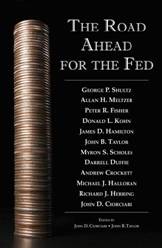
Concerns about the Fed's New Balance Sheet, in The Road Ahead for the Fed, edited by John D. Ciorciari and John B. Taylor, Stanford: Hoover Institution Press, 2009. Working paper draft available here. Book can be ordered from Amazon here.
Oil Prices and the Economic Downturn, testimony before the Joint Economic Committee of the United States Congress, May 20, 2009.
Daily Changes in Fed Funds Futures Prices, Journal of Money, Credit, and Banking June 2009, vol. 41, no. 4, pp. 567-582. Working paper version here. An article summarizing this paper for a general audience is available at Econbrowser.
Understanding Crude Oil Prices, Energy Journal 2009, vol 30, no. 2, pp. 179-206. Working paper version here, slides for talk available here.
Daily Monetary Policy Shocks and New Home Sales, Journal of Monetary Economics 55 (2008), pp. 1171-1190. Articles summarizing this paper for a more general audience: [1], [2]. For an illustration of how these estimates relate to developments in January 2008, see this analysis.
Oil and the Macroeconomy, in New Palgrave Dictionary of Economics, 2nd edition, edited by Steven Durlauf and Lawrence Blume, Palgrave McMillan Ltd., 2008.
Regime-Switching Models, in New Palgrave Dictionary of Economics, 2nd edition, edited by Steven Durlauf and Lawrence Blume, Palgrave McMillan Ltd., 2008.
Assessing Monetary Policy Effects Using Daily Federal Funds Futures Contracts, Federal Reserve Bank of St. Louis Review, July/August 2008, pp. 377-393.
Inside the Economist's Mind: A Book Review, Macroeconomic Dynamics, 2008, vol. 12, pp. 112-116.
Commentary: Housing and the Monetary Transmission Mechanism, in Housing, Housing Finance, and Monetary Policy, 2007, Federal Reserve Bank of Kansas City, pp. 415-422.
Normalization in Econometrics, coauthored with Tao Zha and Dan Waggoner . Econometric Reviews, 2007, vol 26, no 2-4, pp. 221-252. Click here to download computer code used in the analysis.
Dating Business Cycle Turning Points, co-authored with Marcelle Chauvet. In Nonlinear Time Series Analysis of Business Cycles, edited by Costas Milas, Philip Rothman, and Dick van Dijk, Elsevier, North Holland, 2006.
Computing Power and the Power of Econometrics, Medium Econometrische Toepessingen, 2006, volume 14, number 2, pp. 32-38.
"What's Real About the Business Cycle?" Federal Reserve Bank of St. Louis Review, July/August 2005, 87(4), pp. 435-452. Click here to download computer code and data sets used in the analysis.
"Oil Shocks and Aggregate Macroeconomic Behavior: The Role of Monetary Policy," Journal of Money, Credit, and Banking, April 2004, vol. 36, pp. 265-286. Co-authored with Anna Maria Herrera. Click here to see a copy of the paper or to download data and programs.
"Why Are Prices Sticky? The Dynamics of Wholesale Gasoline Prices," Journal of Money, Credit and Banking, February 2004, vol. 36, pp. 17-37. Co-authored with Michael Davis. Paper can be downloaded as can the data and software used in the study.
What Is an Oil Shock? Journal of Econometrics, April 2003, vol. 113, pp. 363-398. A working paper version can be downloaded
as can the data and software used in the study. Click here for updated estimation results and tests for coefficient stability using data through 2019.
"A Model for the Federal Funds Rate Target," Journal of Political Economy,
October 2002, vol. 110, pp. 1135-1167. Co-authored with
Oscar Jorda.
A working paper version can be downloaded
as can the data and software used in the study. "On the Interpretation of Cointegration in the Linear-Quadratic Inventory
Model," Journal of Economic Dynamics and Control, October 2002,
vol. 26, pp. 2037-2049. Working paper version can be downloaded. "A Re-Examination of the Predictability of the Yield Spread for Real Economic
Activity," Journal of Money, Credit, and Banking, May 2002, vol. 34, pp. 340-360.
Co-authored with Dong Heon Kim
Working paper version
can be downloaded as can the data and
software used in the study.
Advances in Markov-Switching Models, Co-edited with Baldev Raj. Physica-Verlag, 2002. "A Parametric Approach to Flexible Nonlinear Inference," Econometrica,
May 2001, vol. 69. Working paper version can be downloaded,
as can the data and
software used in this study. "The Supply and Demand for Federal Reserve Deposits,"
Carnegie-Rochester Conference Series on Public Policy, December 1998,
vol. 49. Working paper version (missing figures and some mathematical symbols)
can be downloaded,
as can the data and software
used in the study. "The Augmented Solow Model and the Productivity Slowdown," Journal
of Monetary Economics, Dec. 1998, vol. 42 (coauthored with Josefina
Monteagudo).
"Measuring the Liquidity Effect," American Economic Review, March
1997. Click here to download data
and software "Stock Market Volatility and the Business Cycle," Journal of Applied Econometrics,
Sept.-Oct. 1996, vol. 11, no. 5, (coauthored with Gang Lin). Click here
to download data and software "This Is What Happened to the Oil Price/Macroeconomy Relation," Journal
of Monetary Economics, , Oct. 1996 "The Daily Market for Federal Funds," Journal of Political Economy,
Feb. 1996. Click here to
download data and software "Specification Testing in Markov-Switching Time-Series Models", Journal
of Econometrics, Jan. 1996. Click here to download data
and software "What Do the Leading Indicators Lead?", Journal of Business, Jan.
1996 (coauthored with Gabriel Perez-Quiros). Click here to
download
data and software. "Rational Expectations and the Economic Consequences of Changes in Regime," pp. 325-344, in Macroeconometrics: Developments, Tensions, and Prospects, edited by Kevin D. Hoover, Boston: Kluwer Academic Publishers, 1995.

Time Series Analysis, Princeton Univ. Press, 1994. Click here to order from amazon.com or click here to download data and programs to implement examples from the text. Here is a list of items that have updated or corrected from the earlier printings. If you have other suggestions to add to this list, please let me know. Click on pictures at right to order Japanese translation (two-volume set).
"Autoregressive Conditional Heteroskedasticity and Changes in Regime," Journal of Econometrics, September/October 1994 (coathored with Raul Susmel). Click here to download data and software.
"State-Space Models," Handbook of Econometrics, Volume 4, , edited by R. Engle and D. McFadden, North-Holland, 1994. Click here to download data and software.
"Estimation, Inference, and Forecasting of Time Series Subject to Changes in Regime," Handbook of Statistics, Volume 11, edited by G. S. Maddala, C. R. Rao, and H. D. Vinod, North-Holland, 1993.
"Was the Deflation During the Great Depression Anticipated? Evidence from the Commodity Futures Market," American Economic Review, March 1992. Click here to download data and software.
"A Quasi-Bayesian Approach to Estimating Parameters for Mixtures of Normal Distributions," Journal of Business and Economic Statistics, Jan. 1991. Click here to download data and software.
"Long Swings in the Dollar: Are They in the Data and Do Markets Know It?", American Economic Review, Sept. 1990 (coauthored with Charles Engel). Click here to download data and software.
"Analysis of Time Series Subject to Changes in Regime," Journal of Econometrics, July/August 1990. Click here to download data and software.
"A New Approach to the Economic Analysis of Nonstationary Time Series and the Business Cycle," Econometrica , March 1989. Click here to download data and software.
"Rational Expectations Econometric Analysis of Changes in Regime: An Investigation of the Term Structure of Interest Rates," Journal of Economic Dynamics and Control, June/Sept. 1988
"A Neoclassical Model of Unemployment and the Business Cycle," Journal of Political Economy, June 1988
"The Role of the International Gold Standard in Propagating the Great Depression," Contemporary Policy Issues, April 1988
"Monetary Factors in the Great Depression," Journal of Monetary Economics, March 1987
"A Standard Error for the Estimated State Vector of a State-Space Model," Journal of Econometrics, Dec. 1986
"On the Limitations of Government Borrowing: A Framework for Empirical Testing," American Economic Review, September 1986, pp. 808-819, (coauthored with Marjorie A. Flavin).
"Kalman Filter Estimation of Unobserved Monthly Expectations of Inflation," Journal of Business and Economic Statistics, April 1986, pp. 147-160, (coauthored with Edwin Burmeister and Kent D. Wall).
"Uncovering Financial Market Expectations of Inflation," Journal of Political Economy, December, 1985, pp. 1224-1241.
"The Observable Implications of Self-Fulfilling Expectations," Journal of Monetary Economics, November 1985, pp. 353-373, (coauthored with Charles H. Whiteman).
"Historical Causes of Postwar Oil Shocks and Recessions," Energy Journal, January 1985, pp. 97-116.
"Oil and the Macroeconomy Since World War II," Journal of Political Economy, April 1983, pp. 228-248.
"Dynamics of Terrorism," International Studies Quarterly, March 1983, pp. 39-54, (coauthored with Lawrence C. Hamilton).
"Models of Social Contagion," Journal of Mathematical Sociology, June 1981, pp. 133-160, (coauthored with Lawrence C. Hamilton).
Some of the research described above is based upon work supported by the National Science Foundation under grants SBR-9707771, SES-0076072, and NSF-0215754. Any opinions, findings and conclusions or recomendations expressed in this material are those of the author(s) and do not necessarily reflect the views of the National Science Foundation (NSF).